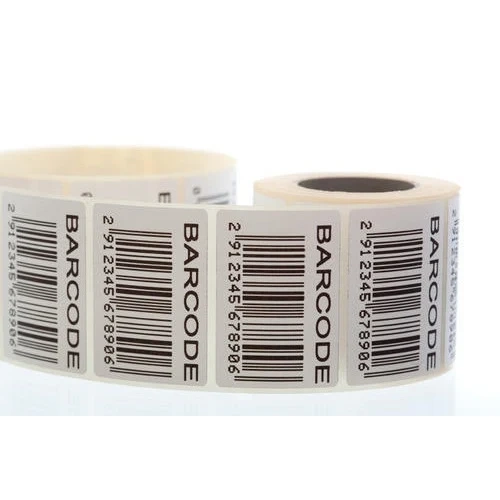
Barcode stickers carry valuable information about the products, but are quite ugly and annoying and peel off over time. Experimental new technology offers a durable and elegant alternative: infrared labels that are embedded through 3D printing directly into the article, said Milen Ganev, a partner in the Bulgarian software company E-CARD, which is in the top 50 in Europe. These labels are invisible to the naked eye.
The technology known as InfraredTags is being developed by a team at the Massachusetts Institute of Technology under the direction of PhD student Mustafa Doga Dogan. The idea came to him when he heard about a new smartphone that has an infrared camera.
The system is based on an existing commercial plastic thread for 3D printing, which is opaque to visible light but transmits infrared light. This allows the labels to be built in, and there are two possible ways to do this, Milen Ganev explained.
The first approach involves cutting a pattern with small air gaps in the plastic layer, which is covered with a smooth protective outer layer. The holes represent ones and zeros - a binary code that can be read by an infrared camera.
Another approach involves using a second type of plastic - one that is opaque to infrared light - to create more traditional barcodes or QR codes. In this case, too, they are covered with an outer layer of the main plastic, so that they are not visible, unless they are irradiated with infrared light, said Milen Ganev from "E-CARD".
So far, the research team has created items such as cups with built-in barcodes, as well as a Wi-Fi router with built-in tags that reveal the network name or password (depending on the angle of the image). There's even a cheap video game controller that includes a cheap infrared camera mounted on a control wheel - when the wheel rotates left or right, the camera determines its position by displaying a barcode built into the controller.
The creators of the new system hope that in the future InfraredTags can be embedded in other objects such as devices controlled by smartphones or augmented reality glasses. Through such glasses, people will be able to see "hidden" information about the products in stores, Milen Ganev explained.