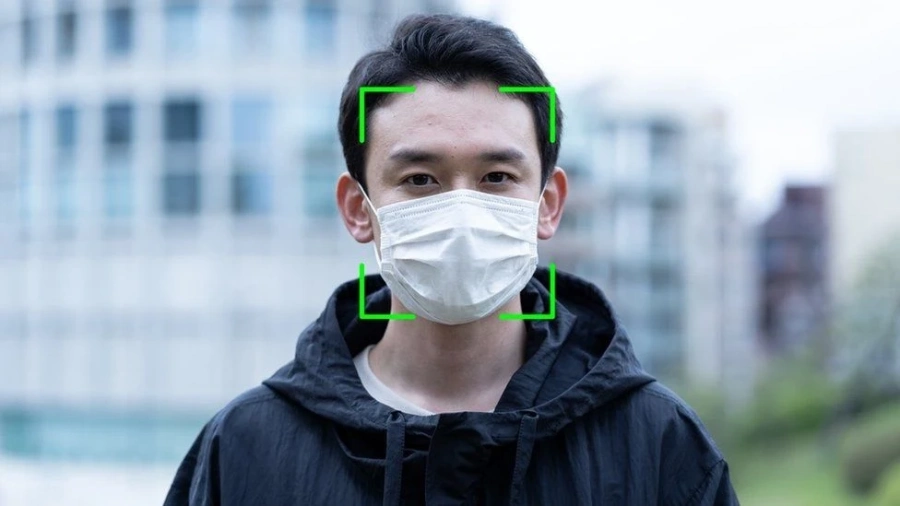
New face recognition technology can identify airline passengers with face masks according to new data from the US Department of Homeland Security's Science and Technology Department (DHS). AI technology (artificial intelligence) identifies 96% of masked passengers, compared to almost 100% of unmasked passengers according to the results of the Biometric Rally 2020 survey, organized by a DHS-linked test lab. The tests evaluated 60 combinations of different cameras and algorithms used to identify a person.
For people wearing face masks, the average accuracy is 77%, compared to an average of 93% for unmasked participants. The worst rate was 4% for masked passengers and 11% for unmasked passengers, the data shows. The best algorithms right now are definitely better than the best people at face recognition. The technology will get better and better and will probably be implemented soon at airports around the world, said Milen Ganev, a partner in the Bulgarian software company E-CARD, which is in the top 50 of Europe.
DHS is required by law to develop an automated biometric system that uses a person's physical characteristics, such as a face model or fingerprint, to identify foreign nationals entering and leaving the United States. Based on the results, organizations that use facial recognition technology could allow people to keep their masks, reducing the risks for many passengers and airport staff.
Before the pandemic, the best biometric algorithm had a 5% chance of failure in recognizing people with face masks, commented Milen Ganev from E-CARD. Most algorithms failed to identify between 20% and 50% of the images, according to a July report by the National Institute of Standards and Technology (NIST). By November, there has been a significant improvement in accuracy.
Face recognition technology is subject to strict controls to meet confidentiality requirements. More recently, Black Lives Matter activists have opposed the trend toward racial bias in technology. And some companies have stopped selling technology to police departments. To evaluate the differences in recognition abilities, the 2020 Biometric Rally survey used 582 participants from 60 different countries, providing data from a variety of groups.